
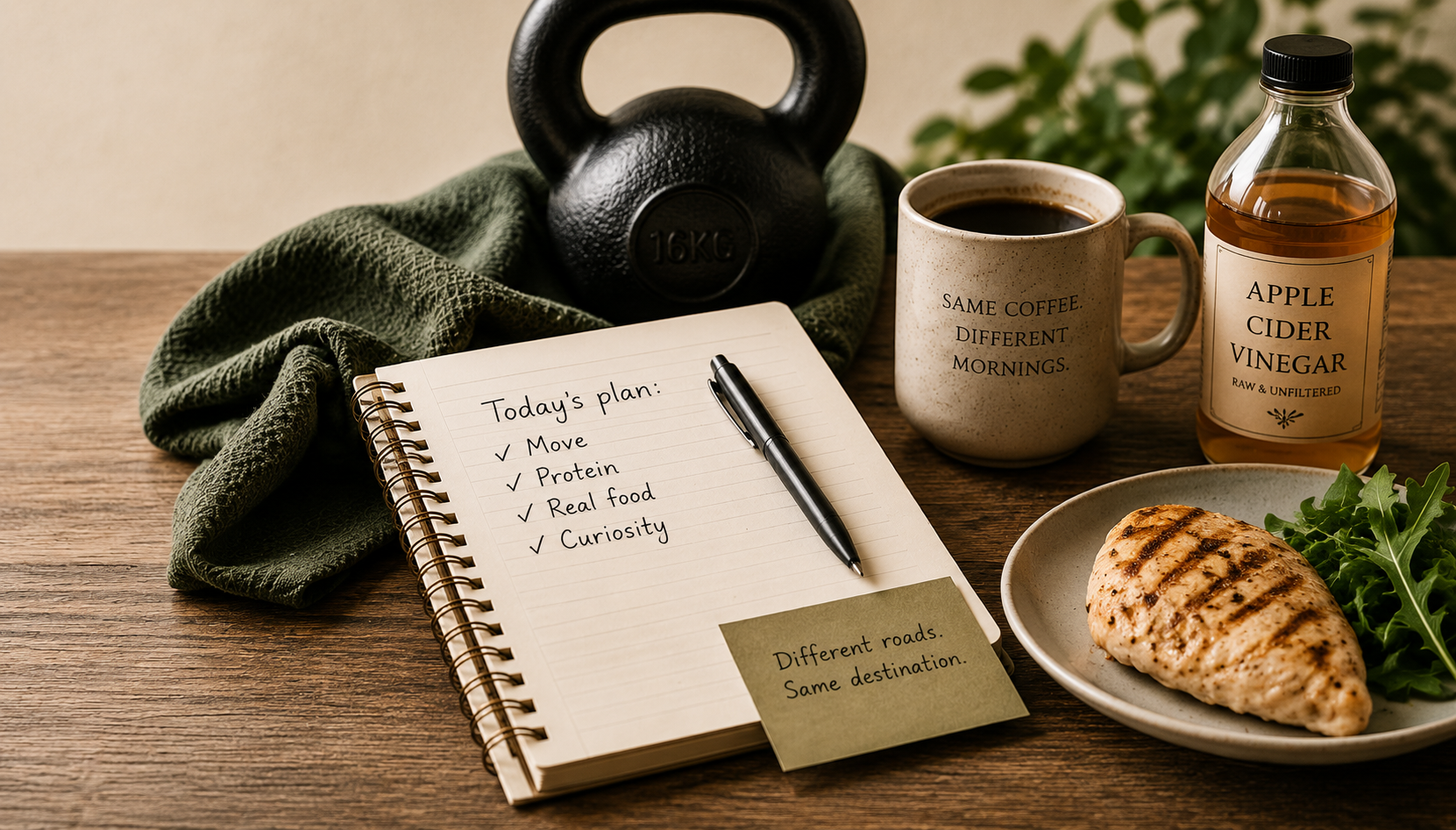
Death by Nutritional Paper Cuts
My husband has discovered nutrition. I am trying to be a good person about this. This restraint, I feel, should be formally recognised.

Why a Thermomix Gets More Useful in Midlife
The Thermomix didn't change when I hit midlife. I did. A reflection on nutrition, decision fatigue, and why some kitchen tools become more valuable as life gets more complicated.

What a Long Lunch Taught Me About Gut Health and the Midlife Brain
A long lunch at Bang Bang Noosa sent me down a rabbit hole of gut microbes, brain health and the surprisingly powerful idea of eating 30 different plants a week. It turns out the herbs, spices and slightly neglected vegetables sitting in your fridge may have the ability to do more for your midlife brain than we once thought.

Do I Cut the Mustard?
Last weekend I had one of those days you want to bottle. Five women, a long lunch, and a conversation I'm still thinking about.

Mismatched Desire in Midlife: Why His Testosterone and Your Estrogen Are Working Against Each Other
It's not you. It's not your relationship. It's two bodies in the same bed running on completely different hormonal clocks — and nobody warned you this was coming.

If You've Never Heard of Zeitgebers, Your Belly Fat Has
Most of us have never heard of zeitgebers. Our belly fat, apparently, has. Here's the explanation midlife women actually deserve — and it has nothing to do with willpower.

The Shift Nobody Names: What Men Need to Know About Andropause
"In many midlife households, two hormonal shifts are happening at once. One has a conversation. The other is blamed on stress. Andropause is worth knowing about."
Midlife Belly Fat: It’s Hormones — and the Kitchen Can Help
Most midlife women are doing more — eating more carefully, moving more consistently — and watching their waistline expand anyway. The waist heads north. Everything else heads south. This isn't a willpower problem. It's physiology — and your kitchen is where it starts to shift

Menopause Isn’t a Malfunction — It’s a New Operating System for Your Metabolism, Energy and Weight
Menopause is a whole-system metabolic shift. If your energy, weight, sleep and mood feel different, there’s biology behind it. Here’s what’s actually happening in midlife — and what truly helps.
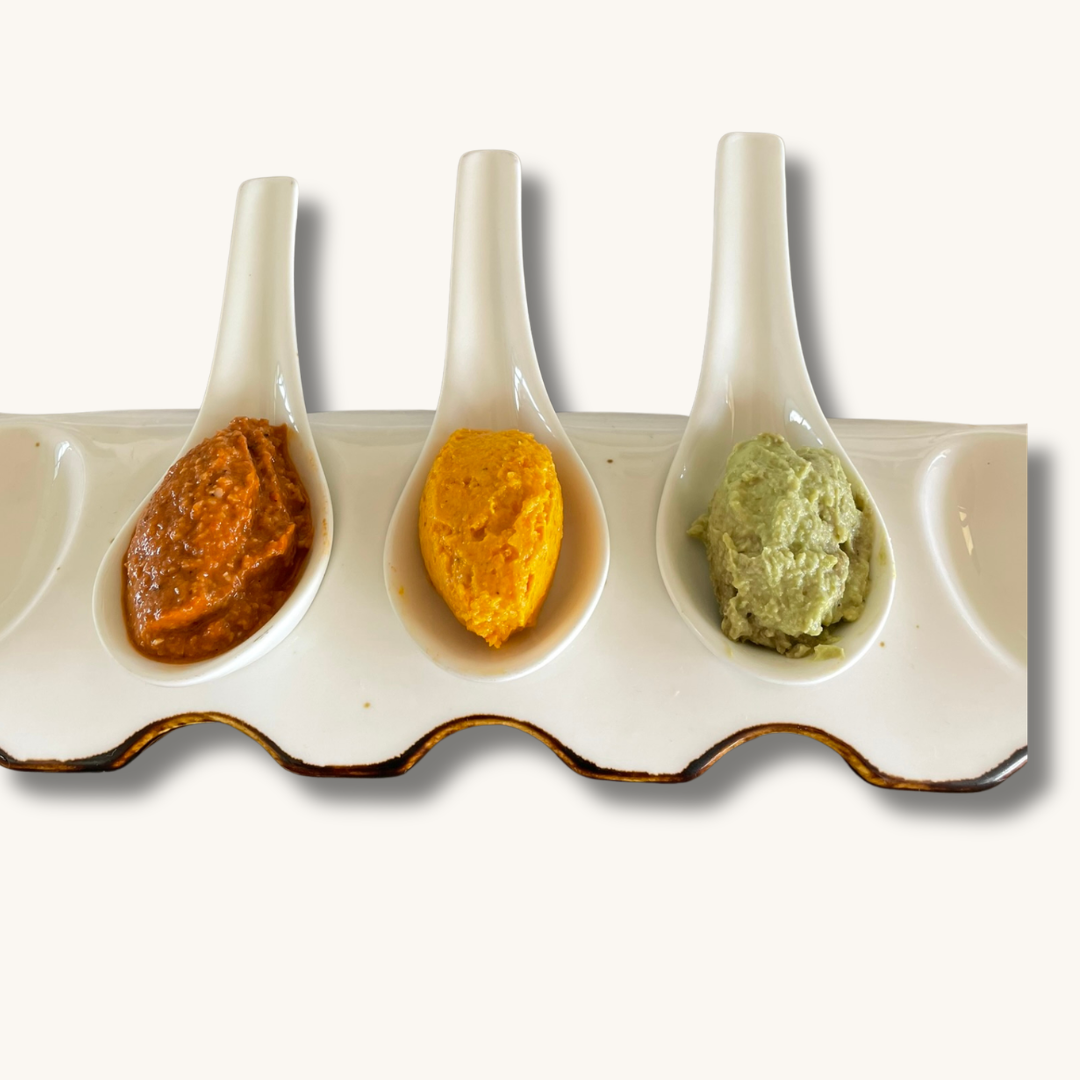
This Isn’t Just a Pretty Platter — It’s Your Midlife Energy Secret Weapon
Midlife changes how your body responds to snacks. This grazing board approach explores why protein-forward dips, healthy fats and vegetable-based platters support steadier energy, balanced blood sugar and calmer digestion after 40 — reducing bloating, heaviness and 3pm crashes

Why “Eat More Carbs” Hits Differently After 45
In midlife, the metabolic rules change. As estrogen declines, muscle cells become less responsive to glucose — and the carbohydrates that once fueled our workouts can start to feel like they’re working against us.
This isn’t a metabolic failure; it’s a shift in context. In this article, we unpack why advice built for young men doesn’t work in menopause, and how strength training and fiber-buffered carbs help guide energy where your body can actually use it.

It’s not how much protein you eat. It’s whether your body gets the signal.
Most women technically eat enough protein. Most women are still missing the threshold that matters. Here's why per-meal protein is the number that actually moves the needle in menopause.
Stay in touch with The Cook’s Catalyst
Simple recipes, calm food guidance, and new Catalyst Journal posts — straight to your inbox