
Green Eggs and Gains
"I do not like the 10am crash. I do not like it — brain gone to ash. Eat this instead."
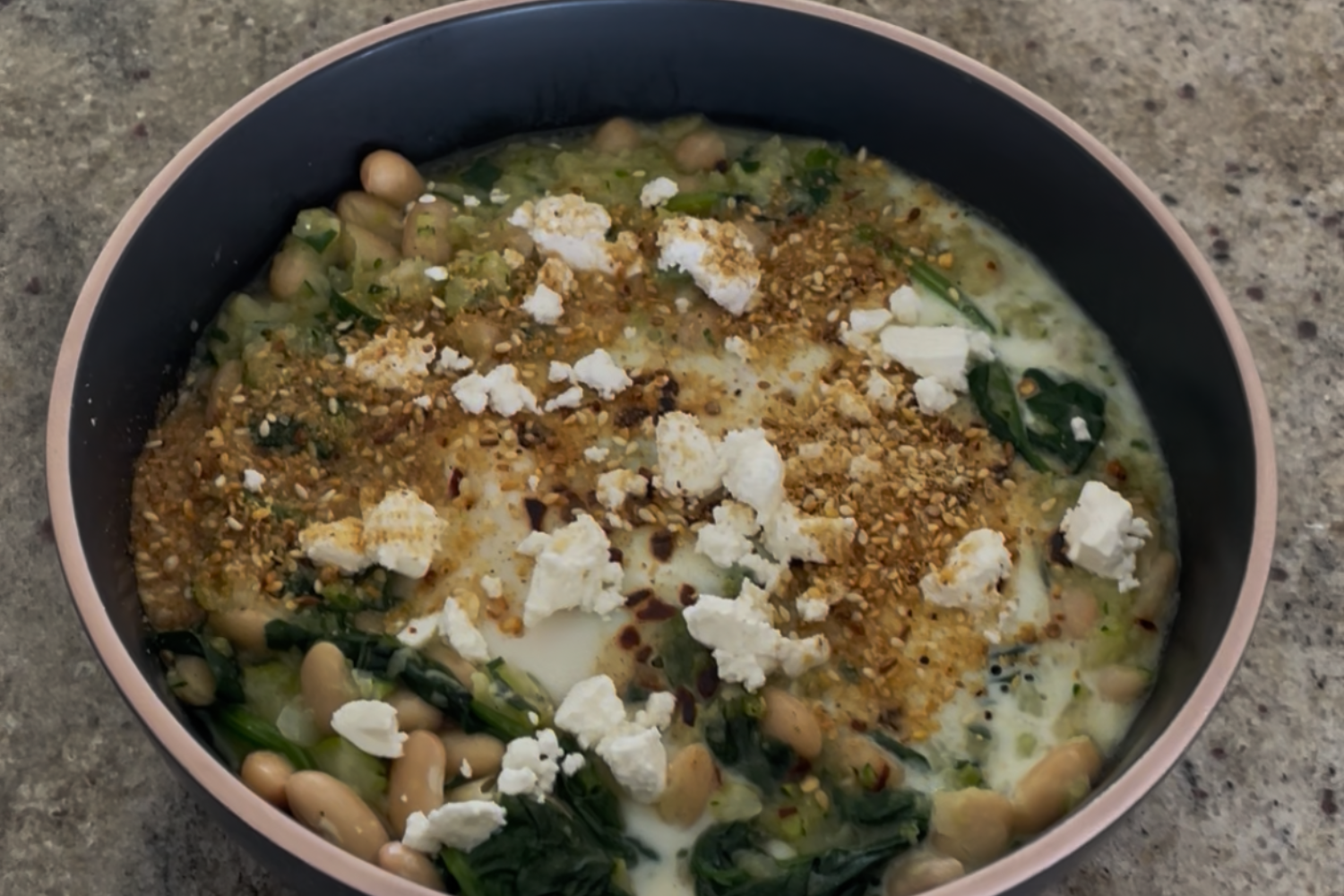
Yes, gains. Not grains. Protein gains. Blood sugar gains. The satisfaction of making it to lunch without losing your mind or raiding the pantry. Small wins - yet significant ones.
We're done rhyming. But the crash is real — the mid-morning ambush that shows up reliably when breakfast looked responsible on paper but didn't actually contain enough protein to matter. In midlife, that gap costs more than it used to. Estrogen decline changes how your body handles blood sugar, and the yoghurt-and-toast breakfast that used to work now sends appetite sideways before 11am.
This dish fixes it. Two eggs and cannellini beans get you to around 22–24g protein before the feta — add 75g cooked chicken gets you to 30-32g per serve. That's the threshold where muscle protein synthesis actually activates. Combined with meaningful fibre from the beans and vegetables, blood sugar stays stable, hunger stays quiet, and the 10:30am raid on the pantry simply doesn't happen.
One pan, under 20 minutes. Both a Thermomix and a conventional oven version below.
Serves 2
Ingredients
– 4 eggs
– 2 large handfuls baby spinach or silverbeet
– 1 small zucchini
– 100g cannellini beans, drained and rinsed — increase to ¾ cup if legumes sit well with you
– 75g cooked, shredded chicken
– 60g feta, crumbled
– 2 tbsp dukkah
– 1 tbsp olive oil
– Salt, pepper, pinch of chilli flakes
With a Thermomix
Place the zucchini, roughly chopped, into the TM7 bowl and chop for 3 seconds / Speed 5. Scrape down the sides.
Add olive oil and cook for 3 minutes / 120°C / Speed 1.
Add spinach and cannellini beans. Cook for 2 minutes / 100°C / Reverse / Speed 1, until the spinach has wilted and the beans are warmed through.
Use the spatula to gently press some beans against the side of the bowl — this breaks a few down and thickens the mixture without turning it to mush.
Add chicken and stir through on Reverse / Speed 1 for 5 seconds.
Season with salt, pepper and chilli flakes.
Transfer the mixture to a heatproof bowl or dish that fits inside the Varoma tray. Make four wells and crack an egg into each (or use 2 bowls/plates as long as they fit in the varoma.) Crumble feta over the top, cover with foil, and place in the Varoma tray.
Add 500ml water to the TM7 bowl and place the Varoma in position.
Steam for 10–11 minutes / Varoma / Speed 1, until the whites are just set and the yolks still have some movement. Check at 10 minutes — the difference between set-and-glossy and fully rubbery is about 90 seconds. Liquid yolks and set whites are the goal. (Alternatively, bake it in the oven at 180c fan for 10-12 mins.)
Scatter dukkah generously and serve immediately.
Without a Thermomix
Preheat your oven to 180°C fan (200°C conventional).
Grate the zucchini. Heat olive oil in an oven-safe frying pan over medium heat, add the zucchini, and cook for 2 minutes until softened.
Add the spinach and stir until wilted, about 1 minute. Add the cannellini beans and fold through, pressing gently so a few break down into the base — this thickens the mixture slightly and makes the whole pan feel more substantial.
Stir in the cooked chicken.
Season with salt, pepper and chilli flakes.
Make four wells in the mixture and crack an egg into each. Crumble feta over the top.
Transfer to the oven and bake for 10–12 minutes, until the whites are just set and the yolks still have some give. Check at 10 minutes — ovens vary and fully set yolks happen faster than you'd expect.
Scatter dukkah generously over the top and serve straight from the pan.
Why this works metabolically: Eggs deliver complete protein and choline — a nutrient most women don't get enough of, and one that matters considerably for brain function and liver health in midlife. Shredded chicken lifts the protein count cleanly to around 30g per serve, clearing the muscle protein synthesis threshold without overcomplicating the dish. Cannellini beans add fibre and plant protein; zucchini contributes vegetables without much fuss. Feta and dukkah are the flavour work — don't skip them. This breakfast leans into protein and plants deliberately. Fibre builds through the rest of the day — no need to front-load starchy carbs first thing.
If legumes are new to your plate, start with half the beans and build up gradually — your gut adapts quickly with regular exposure.
If you're curious about the science behind that 30g protein threshold in midlife, I unpack it in more detail here — Rethinking Protein in Menopause: How Much Your Body Can Use, and When.
