
Midlife Nutrition Has an Economics Problem
There’s a specific kind of tired that has nothing to do with eating badly. It comes from eating carefully, doing everything more or less “correctly” and still ending the day feeling like you lost.
You planned the meals. You chose salad over the sandwich on principle, and you hit your protein target. Yet by 3pm you were standing in front of an open fridge, staring at a jar of olives like it might have answers.
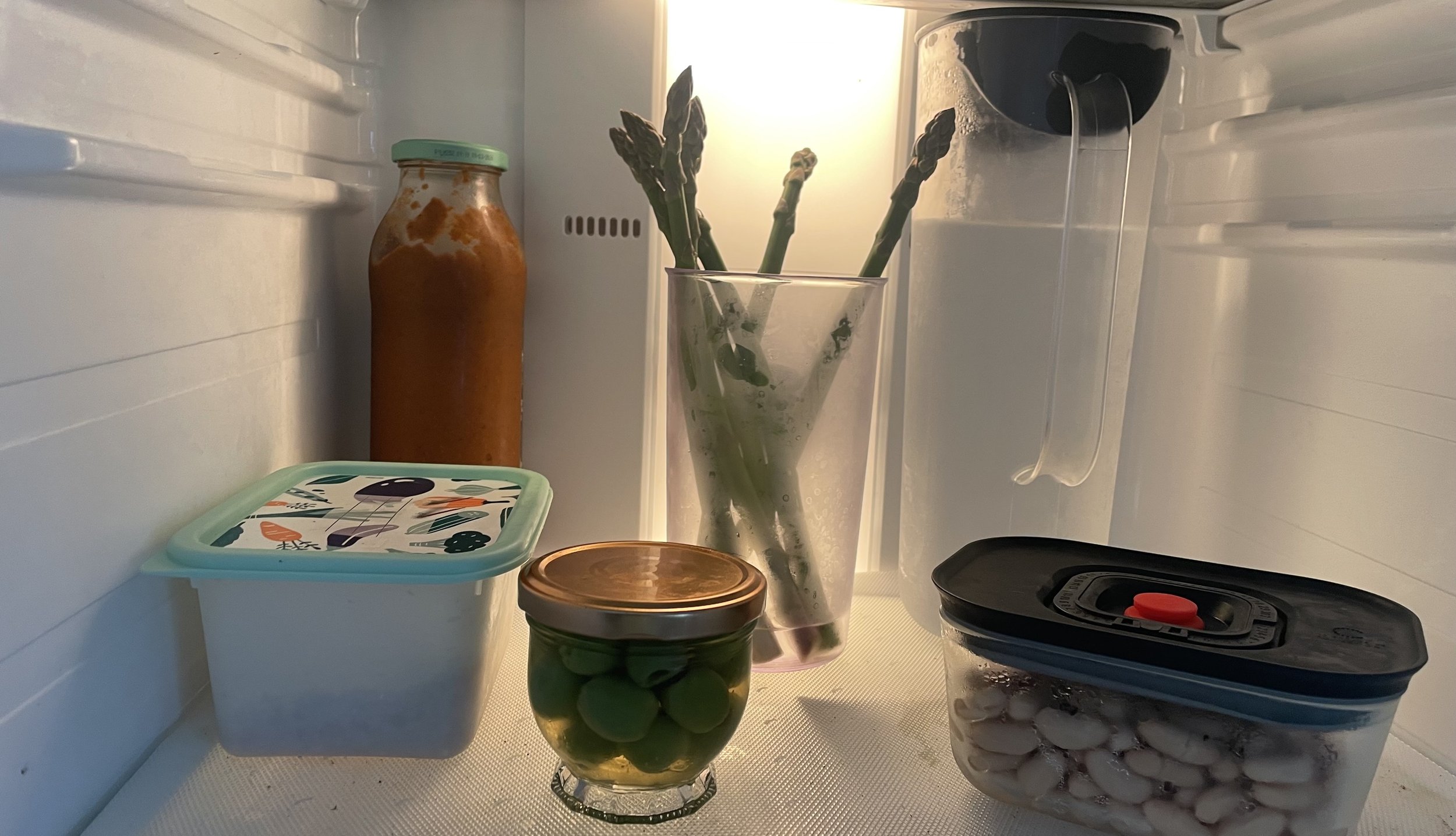
Nothing went wrong, exactly. You just spent a lot of effort on something that didn’t work. And the vocabulary we’ve all been handed for thinking about food (good, bad, clean, indulgent, a treat) is useless here. None of those words explain why the salad let you down.
The question most nutrition advice doesn’t ask or answer
The usual questions are: Is this healthy? How many calories? Is there enough protein? Am I “allowed” this? They’re fine questions, just not complete ones.
What they miss is what a meal does for you in the hours afterwards, which, it turns out, is the part you actually live through. A bowl of oats can be nutritionally unimpeachable and leave you rooting through the pantry by 10am. A beautifully balanced dinner that takes 40 minutes and eight ingredients you don’t normally stock will get made once, admired, and abandoned by the second Tuesday. None of this shows up in a macro count. All of it shows up in your actual week.
So the better question is: What’s the total return on this meal?
Protein, fibre, plant diversity, vitamins and minerals all belong on the balance sheet. But so do satiety, energy, pleasure, how you feel two hours later, and whether you’ll make it again. Tallying nutrients is accounting: it tells you what went in. Economics asks what the meal delivered once you’d paid for it in time, effort, money and hunger.
That’s Nutritional Economics: less a diet philosophy than a habit of asking what a meal contributes to your life, not merely what it contains.
Why the calculation changes in midlife
At 25, the body has a creative accountant. It can make some fairly questionable inputs balance, hide a few nutritional liabilities and carry the occasional deficit forward without sending an urgent letter. Many of us got aways with meals that were low on protein, light on substance or arranged according to whatever happened to be available at 5pm.
Somewhere around perimenopause, the accountant gets stricter.
Estrogen does far more than run the reproductive system. It interacts with systems involved in appetite, insulin sensitivity and where the body stores fat. As levels fluctuate and decline, those systems may become less forgiving. Body composition tends to shift too, with fat mass rising and lean mass falling, sometimes without much change on the scales. Add disrupted sleep, stress and several decades of life administration, and the margin for a nutritionally flimsy lunch becomes considerably smaller.
The strategies that appeared to work at 30 (eat a little less, choose the lighter option, move a little more) often stop offering the same return on effort invested, and their opportunity cost is higher. Your willpower hasn’t changed: the operating environment has. Blaming yourself for that is a little like blaming yourself for higher repayments when interest rates rise: same loan, different economics. Annoying, yes. Your fault, no. And not solved by yelling at it.
Protein return
Eight grams of protein at breakfast is not nutritionally worthless. But as a serious bid for muscle maintenance and lasting satiety, it’s closer to a polite opening offer.
Research in older adults puts the useful target at around 25 to 30 grams a meal. The Catalyst Plate™ deliberately aims higher, at 30 to 40, on the principle that if you aim for 35 and land on 28, you’ve still landed somewhere useful. If you’d like to see what that looks like at breakfast, Green Eggs and Gains comes in at around 34g a serve.
Protein isn't the whole story, though. It’s just the line item most likely to be underfunded.
Satiety return
Satiety is a very honest measure of whether a meal worked, and it has very little to do with how virtuous the food looked on the plate. A meal with poor satiety doesn’t merely leave you hungry. It also costs you the 3pm biscuit, the bargaining that follows it, and the slightly unhinged energy you bring to the kitchen at 6pm looking for something, anything, to make the feeling stop.
Protein helps. So do fibre, volume, flavour and enough actual food.
Blood sugar matters too. In a large study using continuous glucose monitors, people whose blood sugar dipped below its starting level two to three hours after a meal tended to feel hungrier and eat more afterwards. That doesn’t mean every meal needs a glucose monitor and a small personal research department. It means carbohydrates usually give a better return when eaten with protein, fibre and fat rather than on their own. Beans, lentils, whole grains, fruit, potatoes and good bread can all earn their place. A plate that’s mostly carbohydrate usually doesn’t. (If you’ve ever finished a bowl of chips without noticing, or eaten a takeaway burger and fries and felt full but not satisfied, you’ll know the feeling.)
Pleasure return
Pleasure gets treated as an optional extra in nutrition advice, which frankly is a mistake. A meal that is nutritionally sound but joyless teaches your brain that eating well is a chore to be endured, and chores get skipped.
Pleasure doesn’t come only from flavour. It can come from a proper dressing, something crunchy, a meal you look forward to, or eating with people you enjoy. Sometimes the return is the conversation, the shared bottle of wine or simply sitting at a table instead of feeding yourself over the sink. A meal is not consumed by a metabolism in isolation. It is eaten by a person with a life.
Effort return
This one comes down to a single question: Will I actually make this again?
The most nutritionally optimised recipe in the world has terrible economics if it lives in your bookmarks folder beside 11 other meals you were going to try someday. The meal you’ll make on a Thursday, tired, mildly disillusioned with life and armed with four ingredients, is worth more than the perfect meal you’ll cook once on a Sunday when the stars align.
Convenience food is not automatically a nutritional failure, and cooking everything from scratch is not automatically a triumph. The return depends on what the effort produces and whether it can be repeated in the life you actually have.
The five-question meal audit
You don’t need a spreadsheet over dinner. Just ask:
Did this meal give me a meaningful amount of protein?
Did it contain enough fibre, volume and substance to satisfy me?
Did I genuinely enjoy eating it?
How did I feel two or three hours later?
Was it easy and appealing enough that I would make it again?
Consider the disappointing salad: leaves, cucumber, cherry tomatoes and some feta. Fresh, colourful, technically healthy, and a terrible investment because there isn’t enough protein, carbohydrate, or pleasure to carry you through.
The salad wasn’t a bad choice. It was underfunded. So fund it properly. Add chicken, salmon, tofu, eggs, beans, or lentils. Add a fibre-rich carbohydrate, and a little more of it if you’ve been to the gym or walked up hills. Use enough dressing to make the vegetables worth eating, and finish with something crunchy: toasted seeds, pickled onion, a handful of herbs.
It’s a similar salad with entirely different economics, and that’s the Catalyst Plate at work: a quarter protein, half plants in at least two colours, a quarter fibre-rich carbs, and good fats throughout. It’s the simplest way I know to get a good return without doing the maths.
How to use it
Think of Nutritional Economics as a filter: a question to run a meal through before you make it, eat it, or do it again next Wednesday.
No meal needs to win in every category. Dinner with friends may offer an exceptional pleasure return and fairly ordinary blood sugar economics. A simple omelette may offer superb protein and effort returns without being the most thrilling thing you eat all week. The aim is a better return, more often.
Ask: “Does this food help me live well, and will I still want to eat it in six months?”
Some meals earn their place at the table.
Others are just taking up space on the plate.
References and Further Reading
Wyatt P, et al. (2021). Postprandial glycaemic dips predict appetite and energy intake in healthy individuals. Nature Metabolism 3:523–529. doi.org/10.1038/s42255-021-00383-x
Bauer J, et al. (2013). Evidence-based recommendations for optimal dietary protein intake in older people: a position paper from the PROT-AGE Study Group. Journal of the American Medical Directors Association 14(8):542–559. doi.org/10.1016/j.jamda.2013.05.021
Mauvais-Jarvis F, Clegg DJ, Hevener AL (2013). The role of estrogens in control of energy balance and glucose homeostasis. Endocrine Reviews 34(3):309–338. PMC3660717
Greendale GA, et al. (2019). Changes in body composition and weight during the menopause transition. JCI Insight 4(5):e124865. doi.org/10.1172/jci.insight.124865
